The Secrets of Card Sorting: A UX Designer's Toolkit
Making Sense of Chaos, One Card at a Time
Imagine stepping into your kitchen, teeming with an array of ingredients—some familiar, others a bit more mysterious. Your mission is to create the most user-friendly and wonderful dish. This is akin to the essence of card sorting in user experience (UX) design.
Card Sorting: The Spice Rack Analogy
Card sorting is like organising a spice rack in a busy kitchen. The diverse content on a website can be compared to an array of spices, all needing thoughtful placement. Each ‘spice’, or piece of website content, is represented by a card, and these cards are then sorted into logical groups—just like categorising ingredients (carrots with carrots, potatoes with potatoes). This process sheds light on how users naturally categorise or group information, helping create a website that aligns with user expectations.
The Process and Its Players
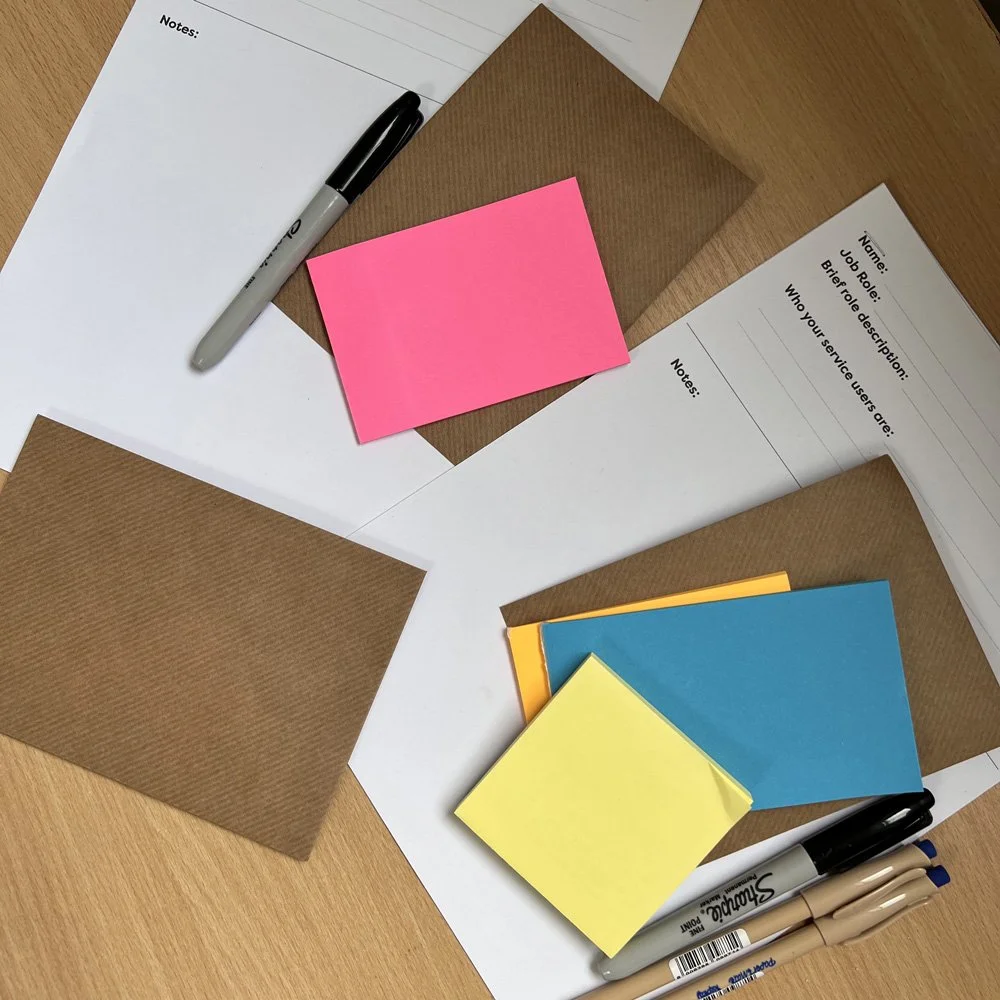
The process starts with preparation. It begins with a content audit—a review of the existing website to determine what is there, what is relevant, and what will be used for the new site. This information is distilled into topics, each one placed onto a card.
A diverse group of participants, ranging from potential users to stakeholders, is then gathered. Their different perspectives are crucial, reflecting the diverse user base of the website.
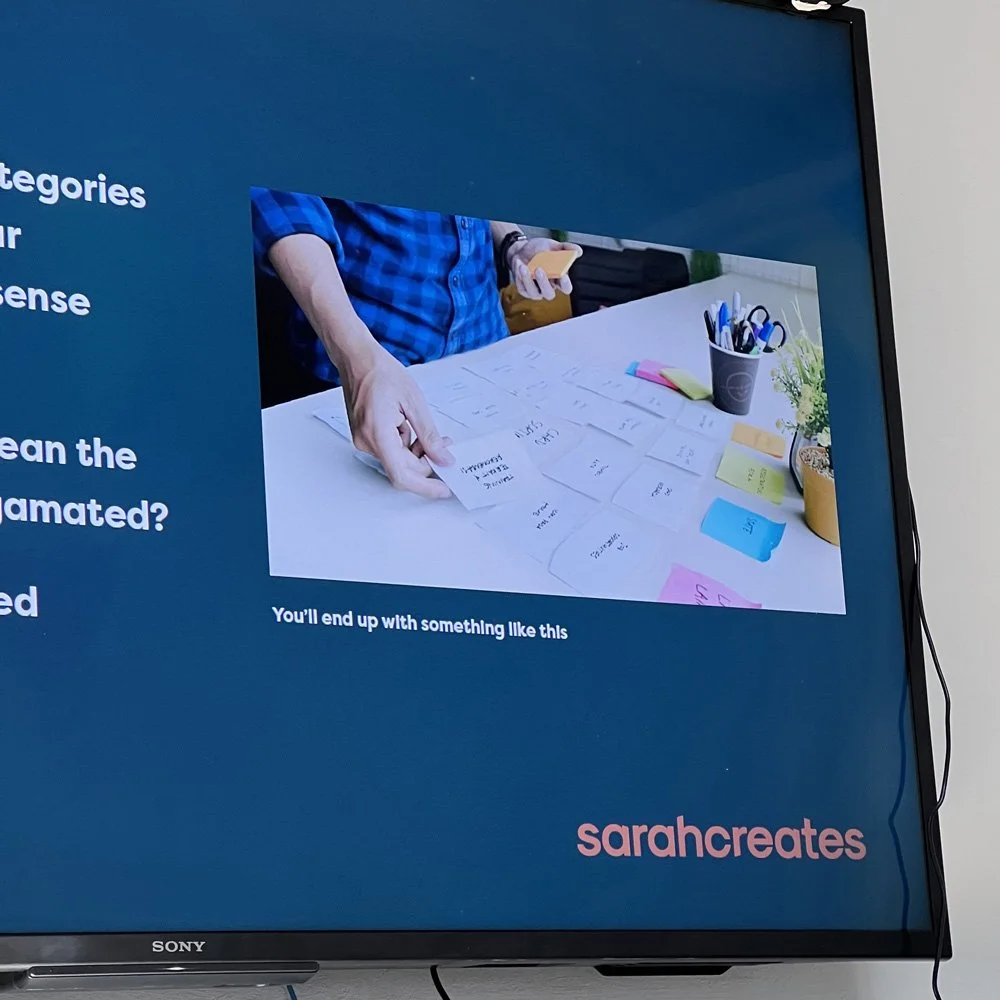
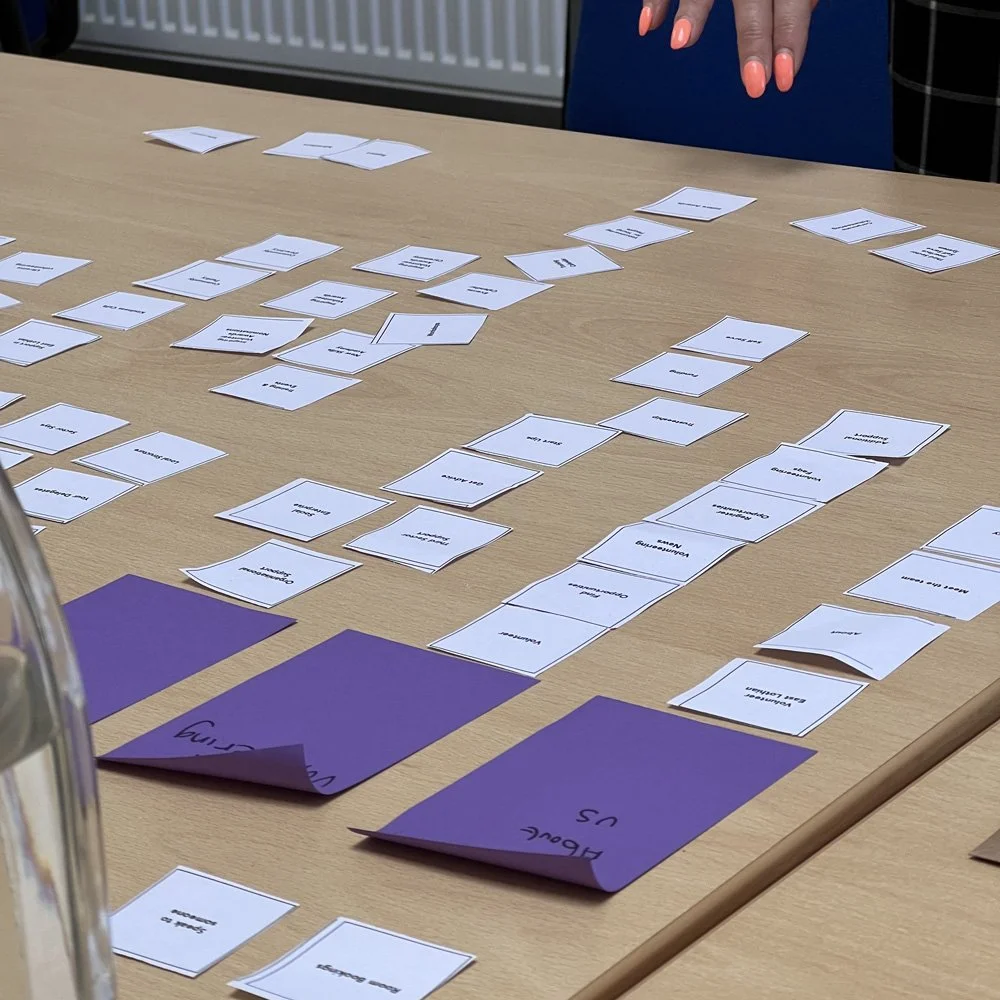
Each participant is given cards, each representing a snippet of content, a topic, or a feature from the site. Their job is to group these cards in a way that makes sense to them. It’s time-consuming—a session might take hours—but it’s time well spent. As they sift through and deliberate over the cards, patterns begin to emerge.
Collating Data: The Big Picture
Once the sorting session concludes, the real magic begins. I like to ask participants to walk me through their thinking, and if I have multiple groups, I encourage discussion to get deeper insights into their thought process.
The data collected is meticulously analysed. Personally, I prefer doing this manually to look for common themes, though specialist software can be used too. It’s a bit like deciphering a secret code—turning chaos into a clear, user-focused structure.
Insights and Outputs
The output from card sorting is incredibly insightful. It offers a user-generated blueprint for structuring website content. This might mean reorganising navigation menus, adjusting content layout, or even rethinking the entire site architecture. The aim is to make the user's journey as intuitive as browsing their favourite book or finding the right spice in a well-organised kitchen.
Time Investment and Setup
A card sorting session can last anywhere from a couple of hours to a full day, depending on the website's complexity and the number of participants. The setup can be physical, using actual cards, or digital, using online tools. Both methods have advantages—digital tools make data collection easier, while physical settings provide direct interaction and discussion, offering richer insights.
Why Card Sorting Matters
In the intricate labyrinth of modern website design, especially for businesses with extensive offerings, card sorting is invaluable. It prevents a website from becoming a virtual maze. By understanding how users expect to find and categorise information, we can design digital experiences that are not only functional but delightful.
Card sorting is more than just a design exercise; it’s a journey into users' minds. It ensures that when someone visits a website, they can find what they're looking for without having to think too hard—just like easily finding the right ingredient in a well-organised kitchen. It’s about creating digital experiences that resonate, engage, and ultimately satisfy.
Conclusion
Card sorting is a testament to the belief that good design is rooted in understanding. It reminds us that in the digital world, just as in the kitchen, the right ingredients, when thoughtfully arranged, can create experiences that are both satisfying and memorable.